


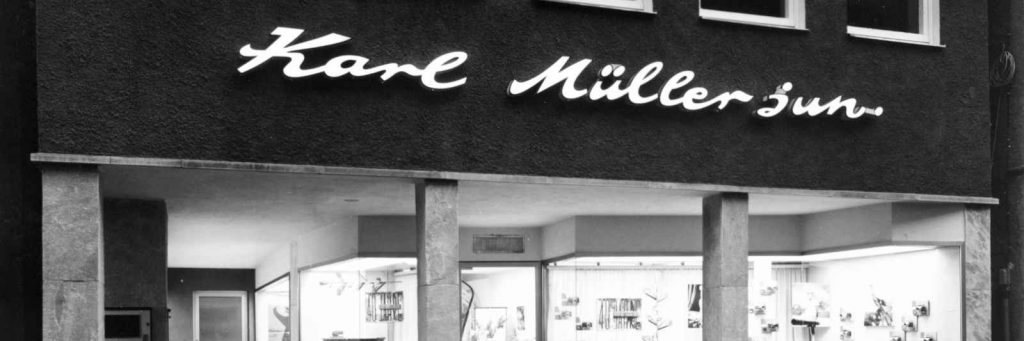
The company is founded by Karl Müller Jr. — a photo and radio retailer in Memmingen. Until 1958, manufacturing and sales are located in rooms attached to the photo shop as well as at various sites across the city of Memmingen.

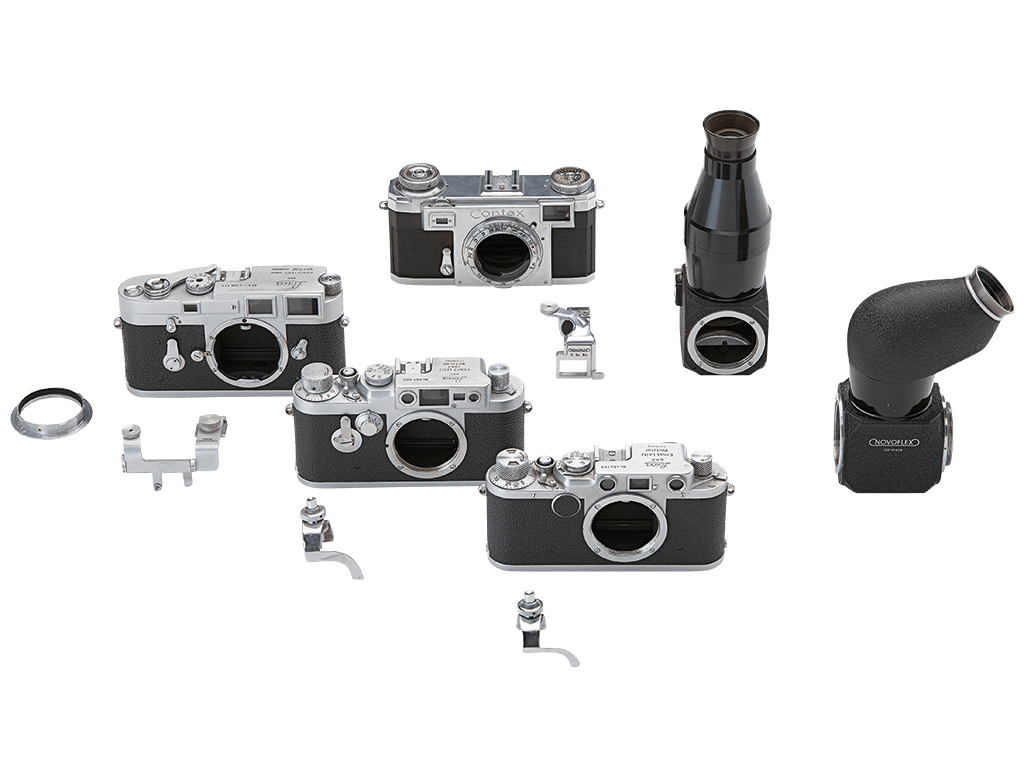
The NOVOFLEX brand is registered. Mirror boxes and accessories for Leica and Contax cameras are sold under this name.
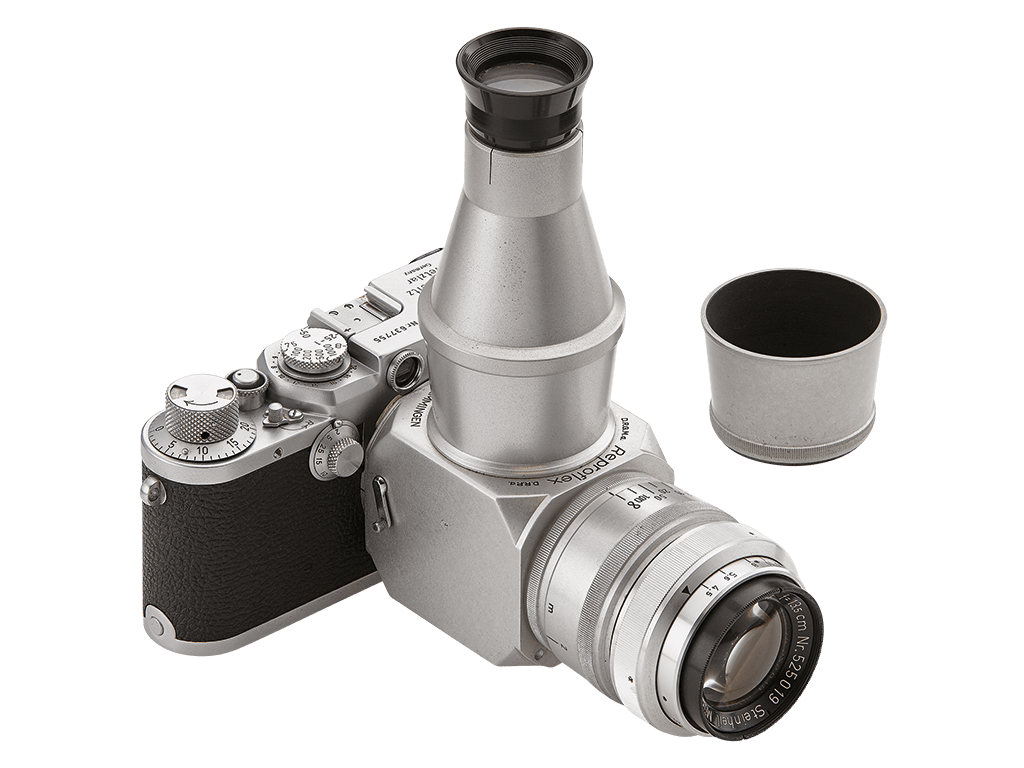
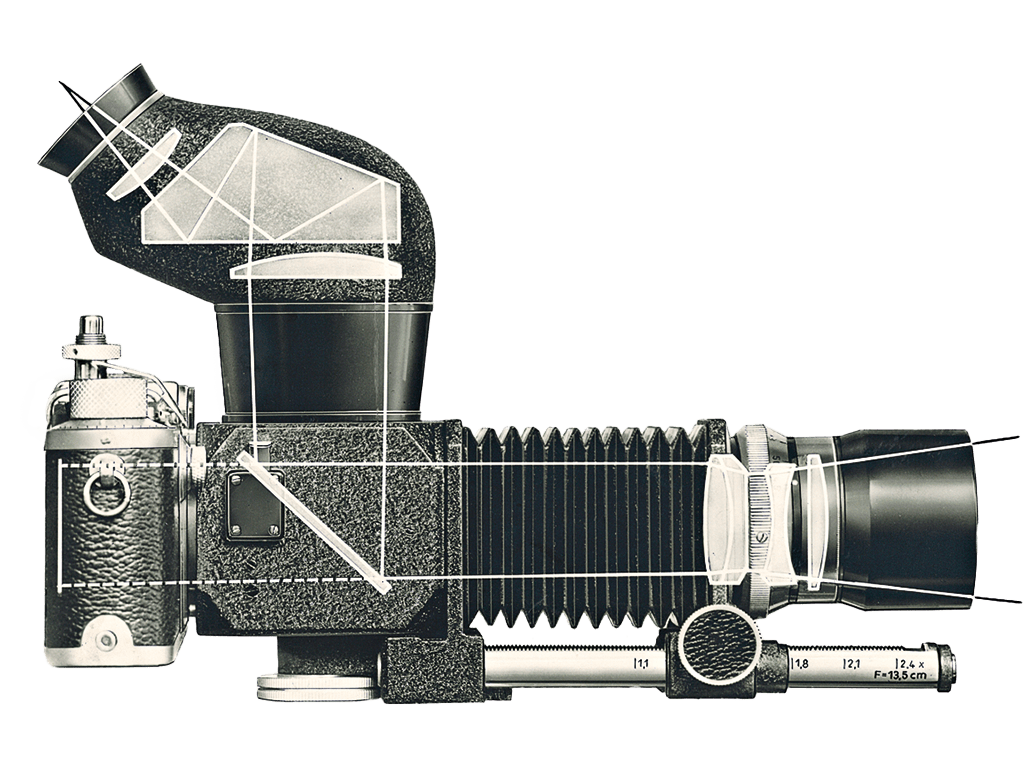
The mirror boxes for Leica rangefinder cameras are initially manufactured under the name Reproflex and sold under the NOVOFLEX name from 1950 onward. They are available with a vertical viewfinder and a swiveling prism attachment. Synchronization with the camera is achieved via a patented, camera-specific release linkage, which makes a double cable release unnecessary. For close-up and long-distance use, NOVOFLEX expands its range with matching accessories such as bellows units and telephoto lenses.
From 1954, the NOVOFLEX mirror box is also available for the Contax IIa and IIIa rangefinder cameras.
A chronological overview of the NOVOFLEX mirror boxes is available in this article.
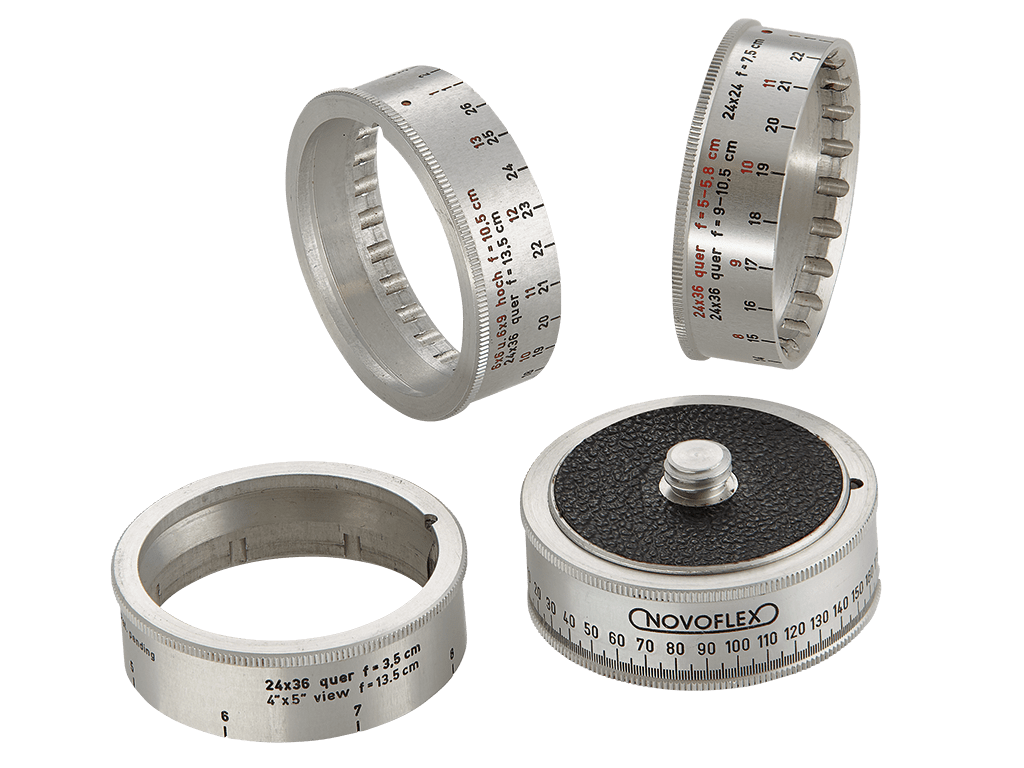
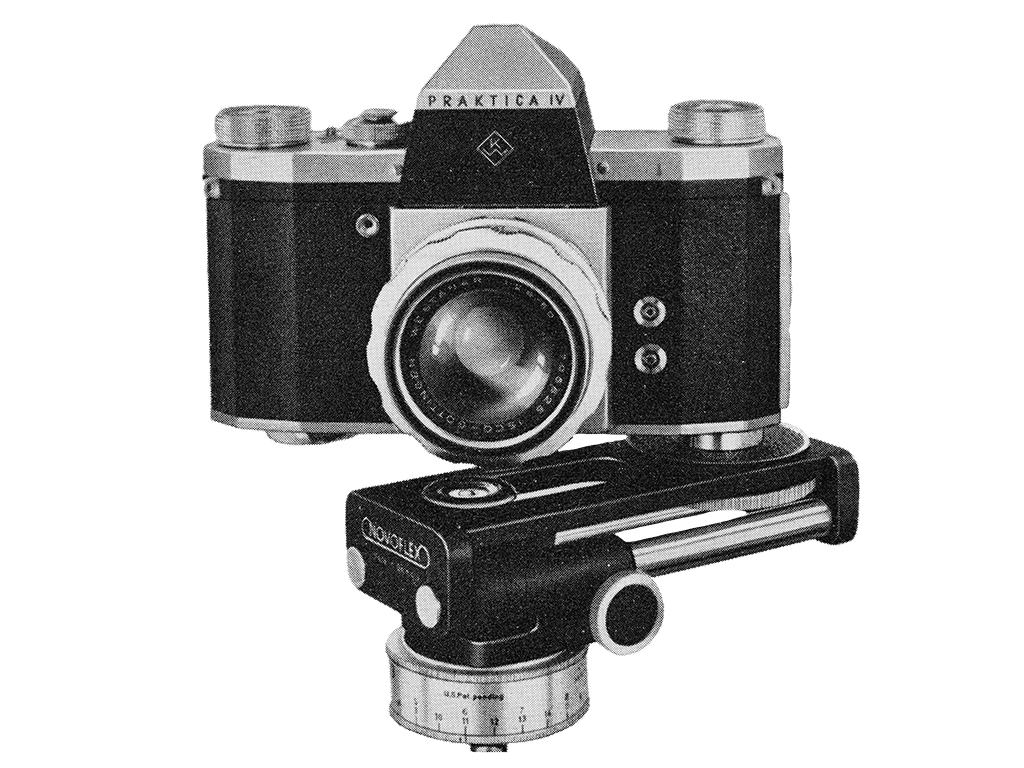
For panoramic photography, NOVOFLEX offered the PANOR panorama head with 8 interchangeable index rings as early as its founding years. The index rings enabled indexed rotation, allowing repeatable use across different formats and focal lengths — in other words, a precursor to today’s NOVOFLEX panorama solutions.
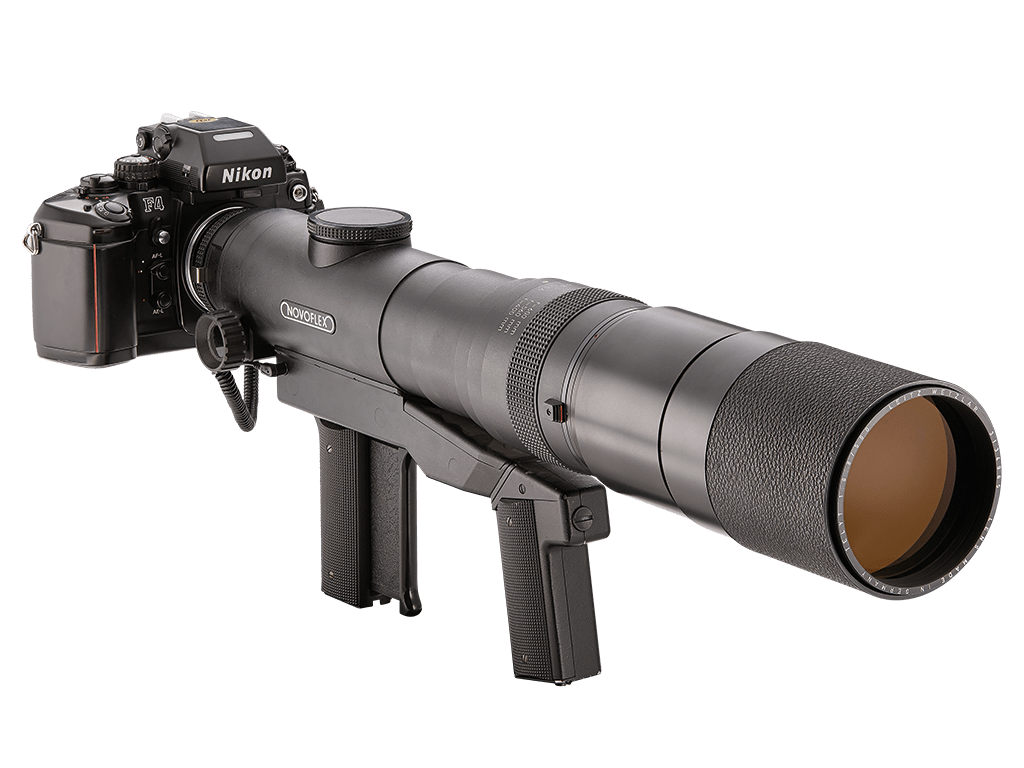
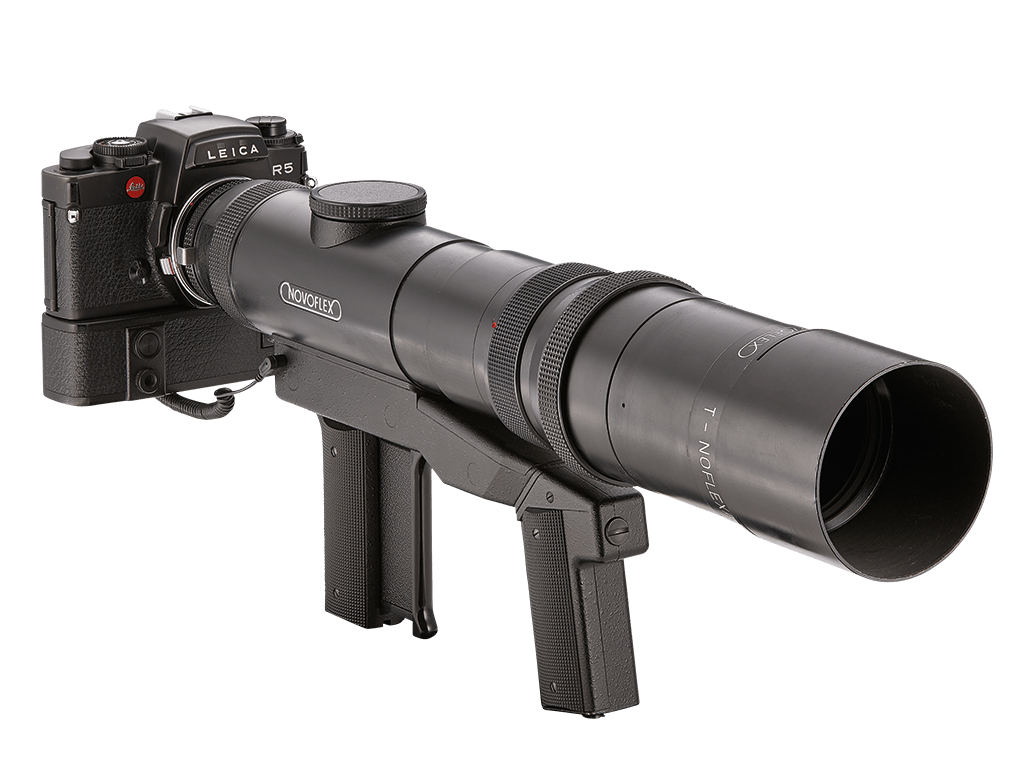
The NOVOFLEX quick-focus lens revolutionized sports, wildlife and nature photography with long focal lengths. The quick-focus system enabled a previously unknown, cold-resistant focusing speed and made images possible that seemed unattainable with classic helicoid focusing. Until autofocus reached market maturity, the NOVOFLEX quick-focus lens was standard equipment for many sports and nature photographers. With its interchangeable lens heads from 240 to 640mm focal length and its focusing grips, carefully refined over time, it is one of the most iconic products in NOVOFLEX history.
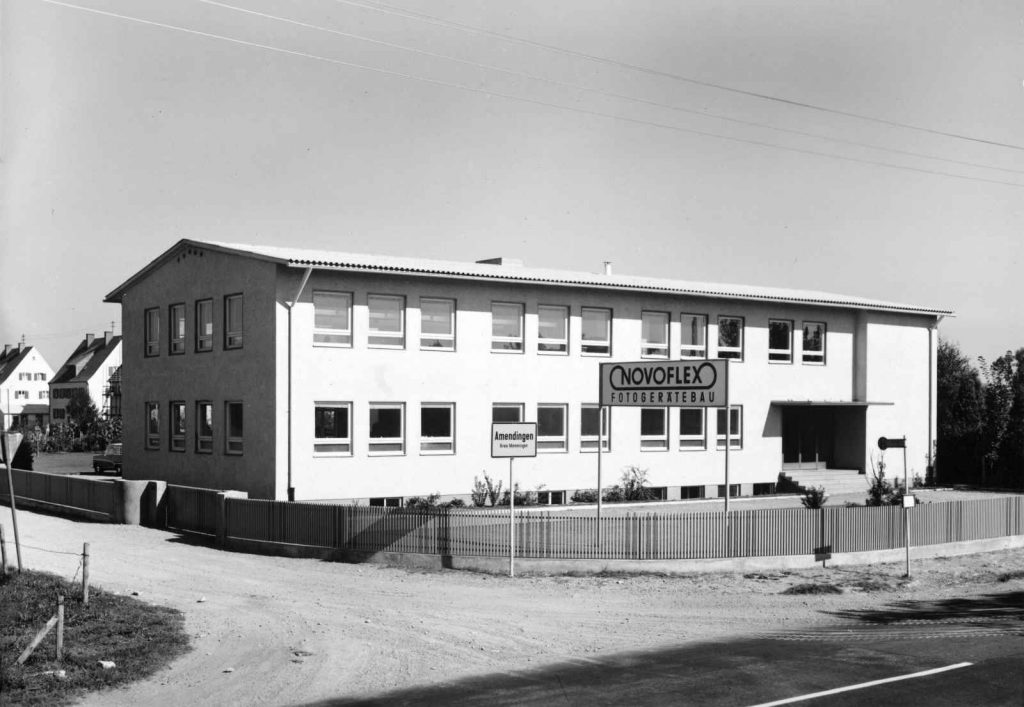
Ten years after its founding, manufacturing and sales are consolidated at a single location for the first time.
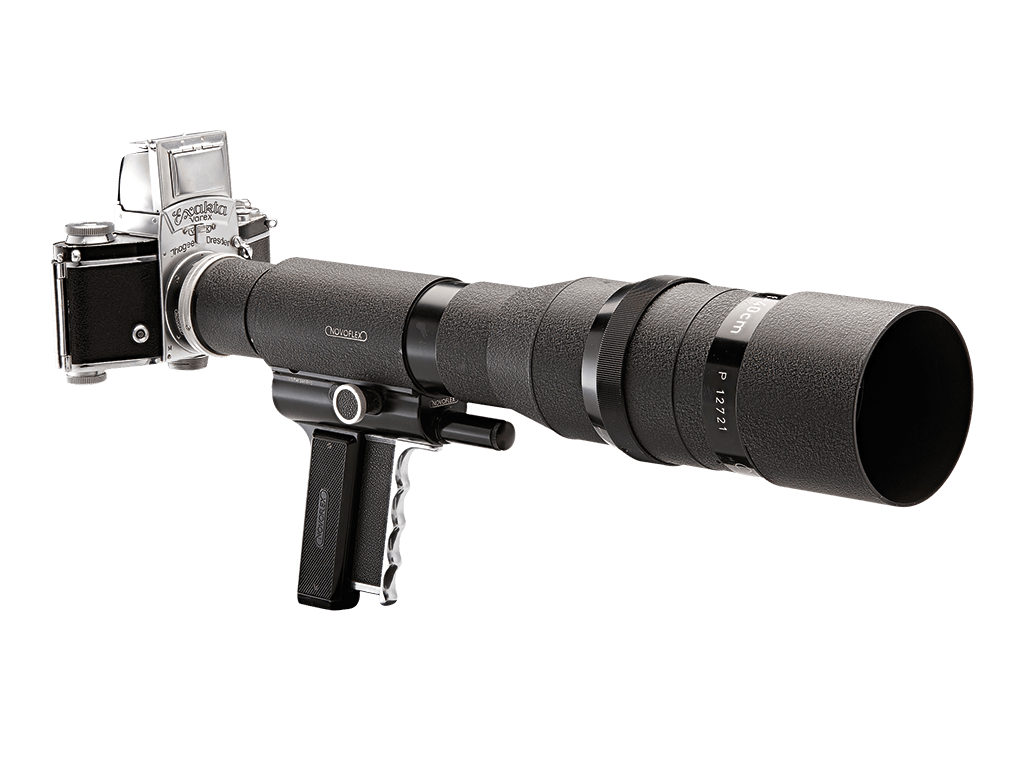
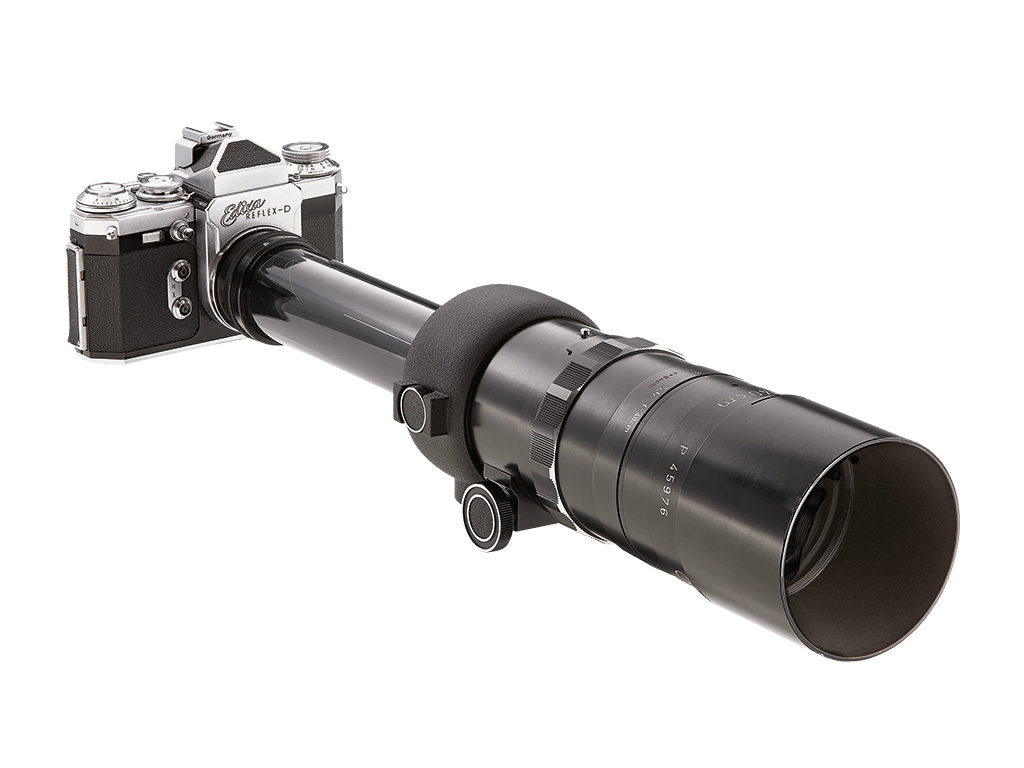
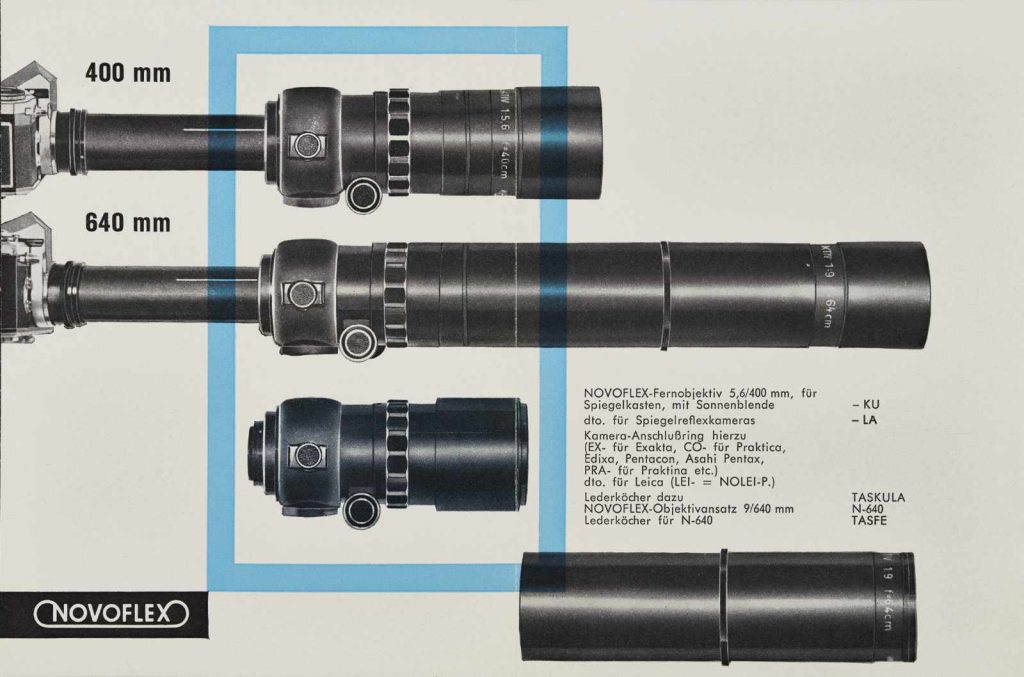
Most telephoto lenses shared one major drawback — their considerable length. To make a telephoto lens easier to transport, NOVOFLEX developed the lens shown here, which can be collapsed to half its length for transport. In this process, the rear tube is pushed in through the open iris diaphragm. To avoid damaging the diaphragm, this is only possible when the aperture is fully open. The focusing unit could be fitted with lens heads for 400 and 640mm focal length and, via an adapter, used on a wide variety of camera models.
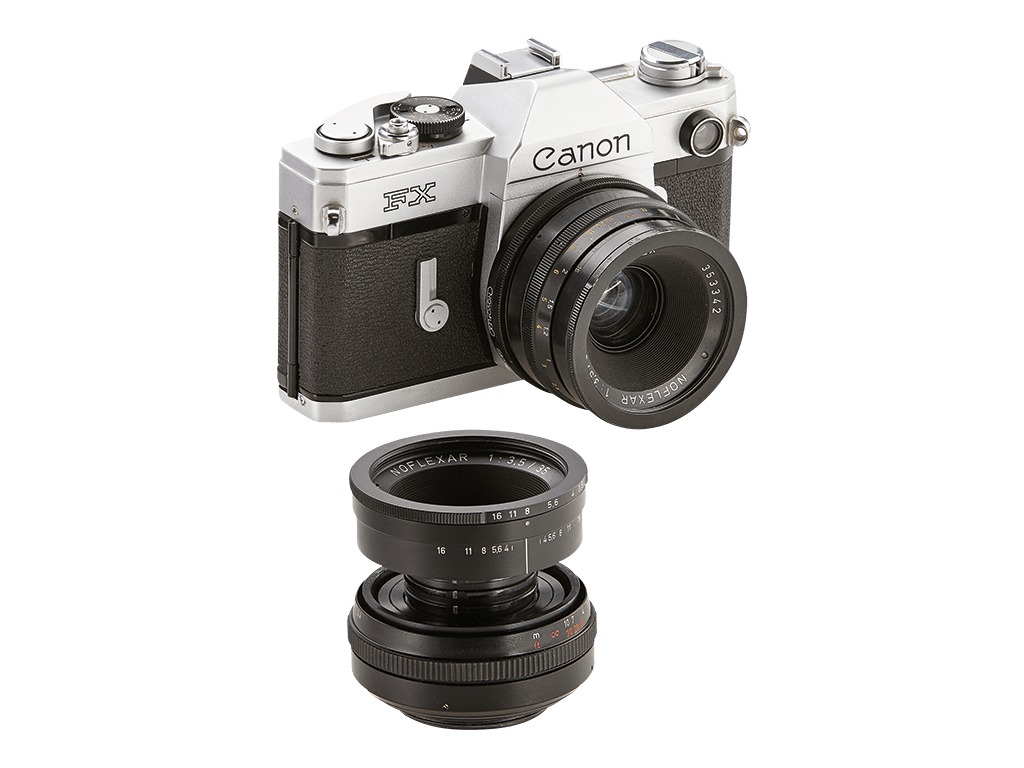
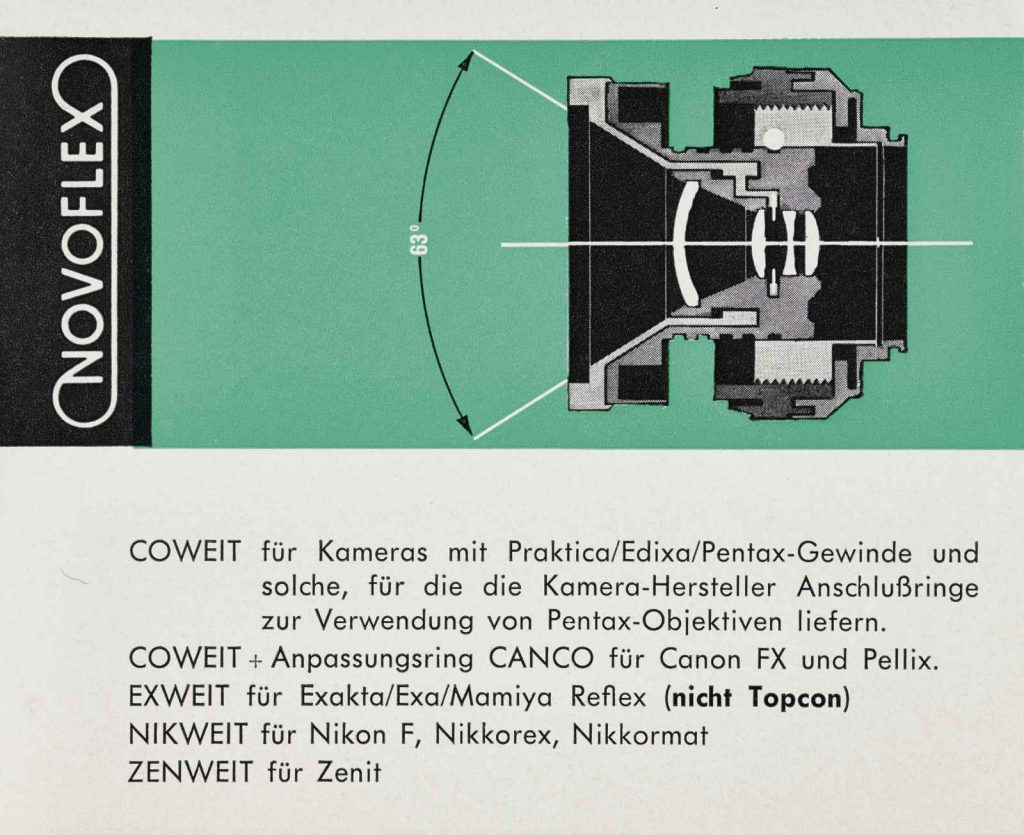
Affectionately nicknamed the “Mountaineer Macro,” this 35mm lens could additionally be set, via a click-stop tube (4 stages), all the way up to a magnification ratio of 1:2. It was available with mounts for a wide range of camera systems on the market at the time.
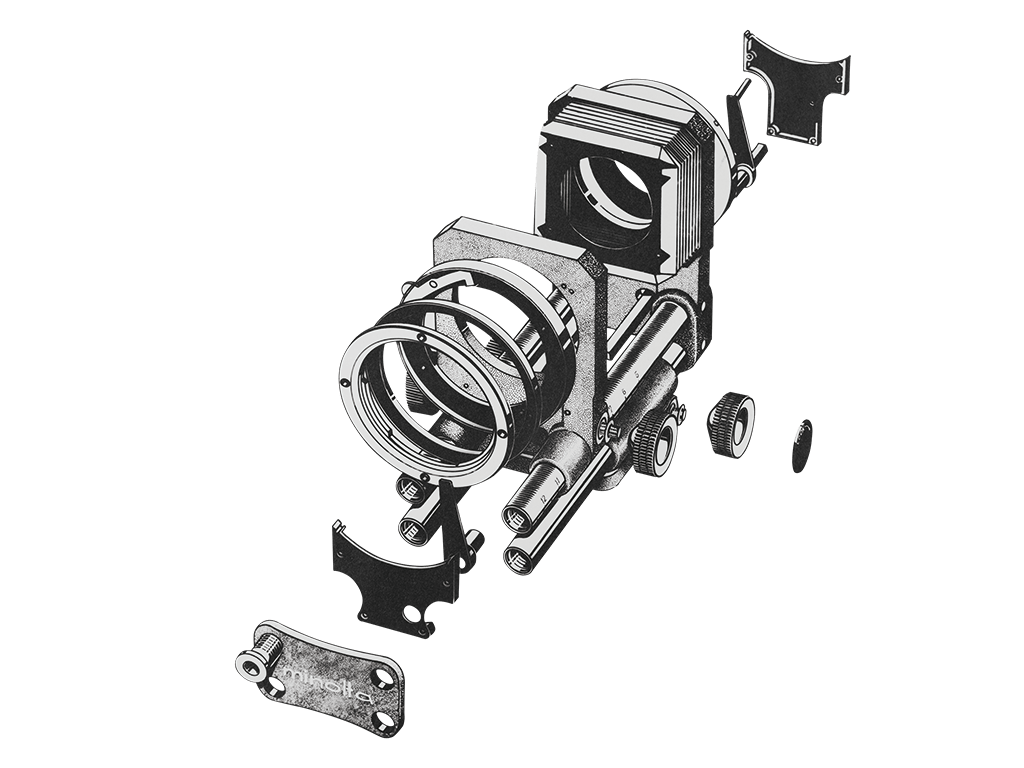
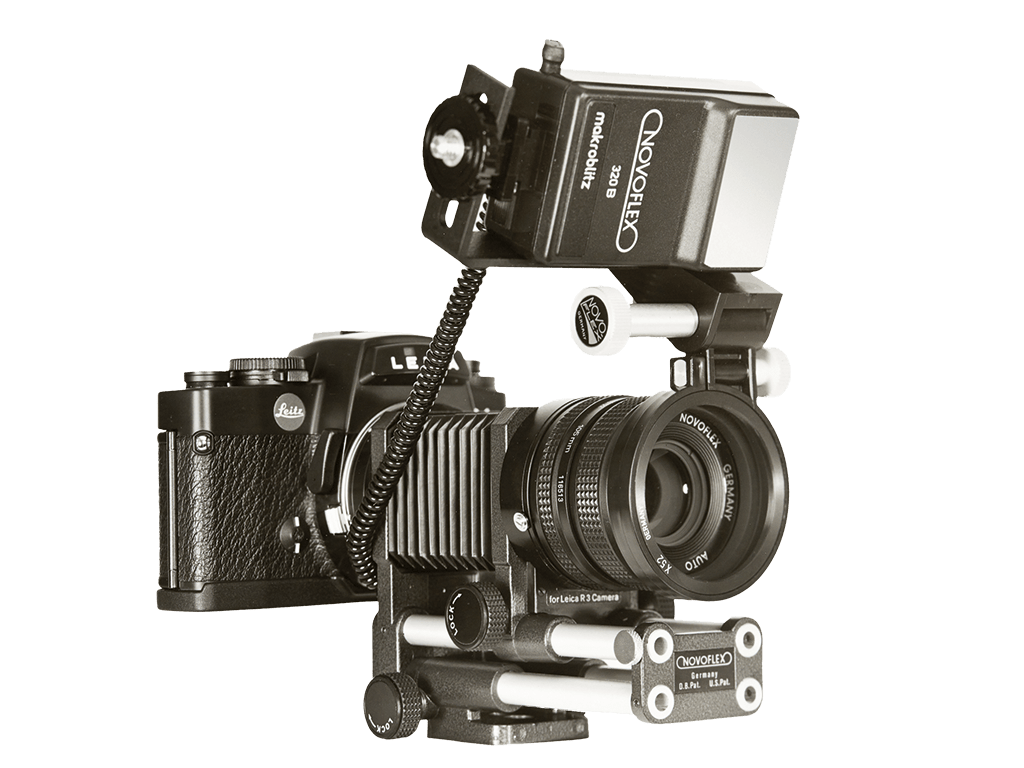
This year marked the beginning of the era of automatic bellows units at NOVOFLEX. The first units transmitted the instant-return diaphragm function via a shaft running inside the guide rails, which was later supplemented by open-aperture metering. This technology was subsequently extended with electrical contact tracks integrated into the bellows. The currently available automatic bellows units build on this technology and add a modular aspect.

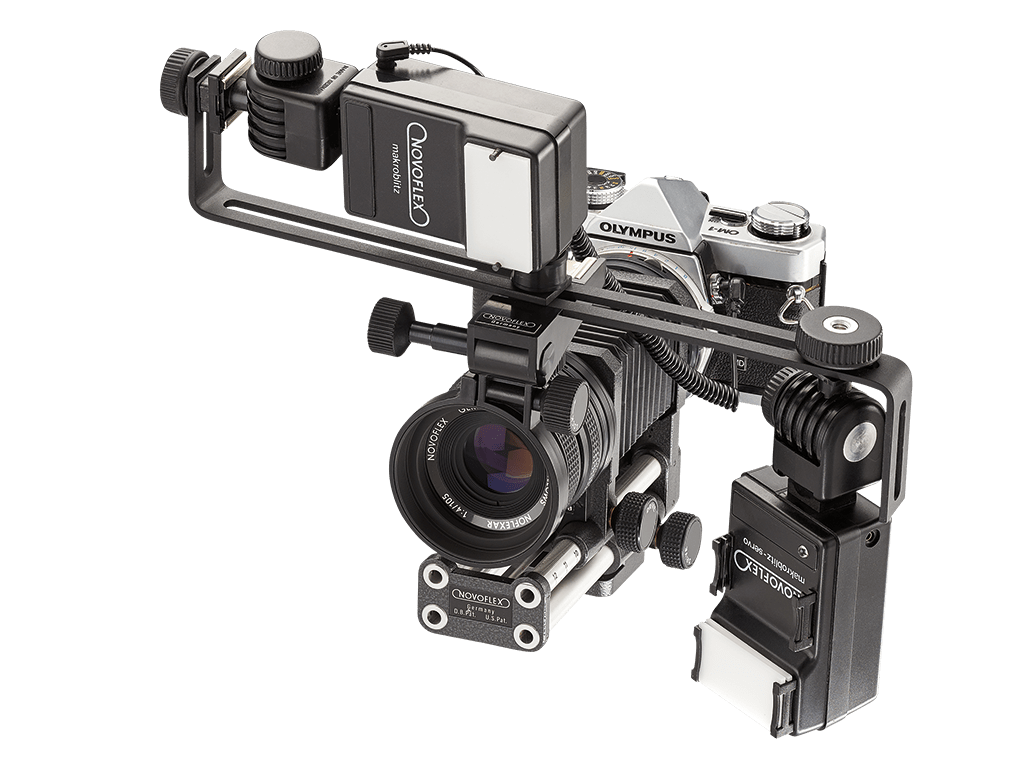
Macro photography presents photographers with the challenge of optimal lighting. With flash units that could be mounted on the lens and positioned individually, NOVOFLEX offered the option of using two light sources at once — fill light and contrast light in macro photography, as well as simulating daylight when working handheld.
With the rise of autofocus cameras, the company’s previous core product range loses significance. The Müller family considers giving up the business.
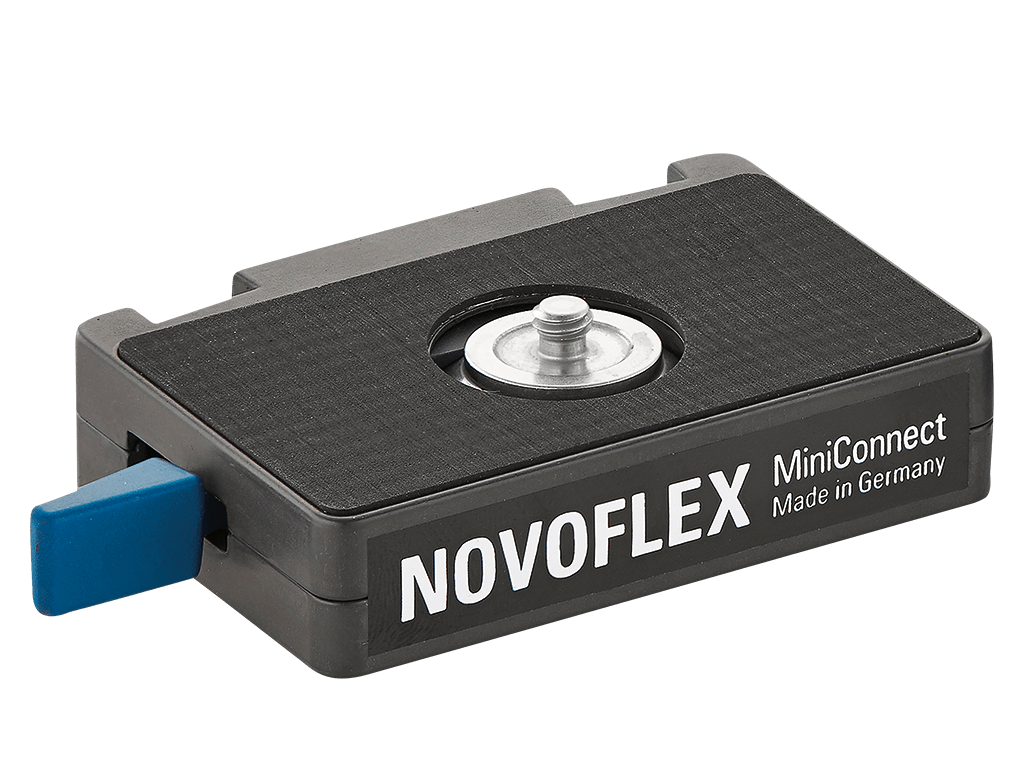
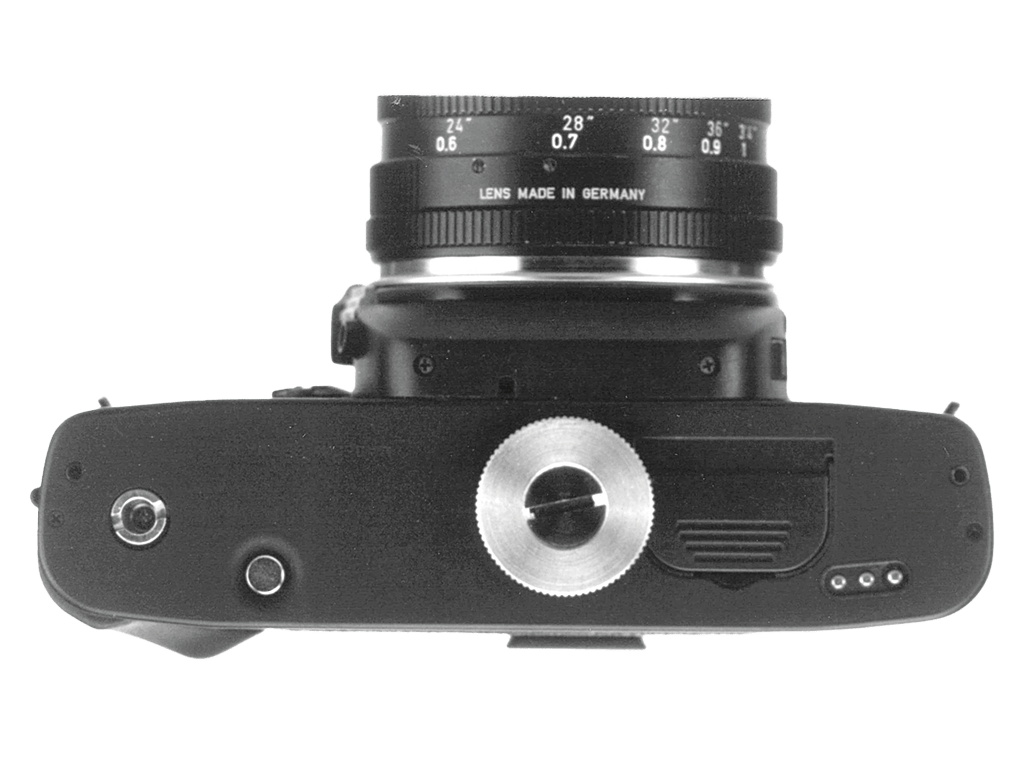
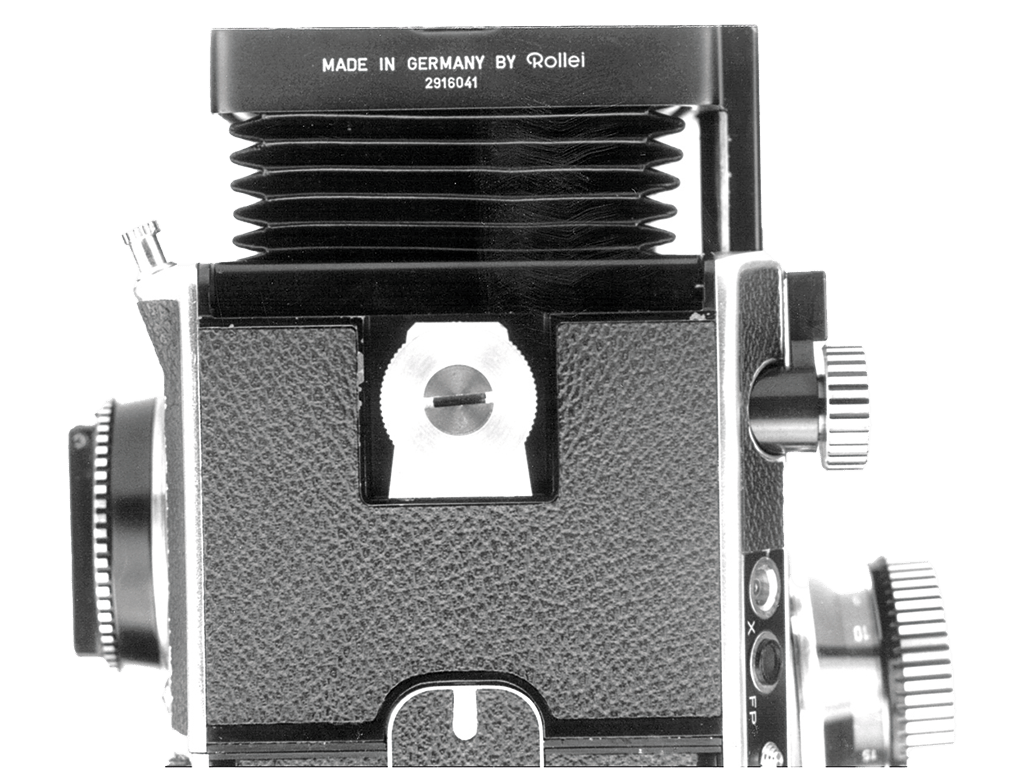
A different kind of quick-release tripod coupling. With the MiniConnect, unlike other coupling systems where the camera contact surface is defined by the quick-release plate, the surface of the camera base is drawn directly onto the surface of the coupling. The contact pressure is determined by the side lever.
Reinhard Hiesinger, with the company for 30 years, together with Kurt Mann (production) and Klaus Bothe (marketing), acquires the naming rights and machinery and re-establishes the company as NOVOFLEX Präzisionstechnik GmbH.

Reinhard Hiesinger hands over management of the company to his son, Michael Hiesinger.

NOVOFLEX acquires the traditional company HEDLER Licht in Runkel/Lahn from Thomas Hedler, the founder’s son.

